Lindsay McKenzie, Inside Higher Ed; Publishers Escalate Legal Battle Against ResearchGate
"The court documents, obtained by Inside Higher Ed from the U.S. District Court in Maryland, include an “illustrative” but “not exhaustive list” of 3,143 research articles the publishers say were shared by ResearchGate in breach of copyright protections. The publishers suggest they could be entitled to up to $150,000 for each infringed work -- a possible total of more than $470 million.
This latest legal challenge is the second that the publishers have filed against ResearchGate in the last year. The first lawsuit, filed in Germany in October 2017, is ongoing. Inside Higher Ed was unable to review court documents for the European lawsuit.
The U.S. lawsuit is the latest development in a long and increasingly complex dispute between some academic publishers and the networking site."
Thursday, October 4, 2018

Wednesday, October 3, 2018
The popularity of zombies is due to one mistake in Night of the Living Dead; The Verge, September 2, 2017
Andrew Liptak, The Verge; The
popularity of zombies is due to one mistake in Night of the Living Dead
[Kip Currier: Yesterday, while updating a public domain lecture for my IP graduate course and having just read this interesting piece in the PittWire about this week's 50th anniversary of the seminal 1968 zombie horror film Night of the Living Dead's world premiere at Pittsburgh's then-Fulton Theater, I came across this fascinating 2017 7-minute Night of the Living Dead - Horrors of Copyright video and played it in class for my students. The video shows how the unforgiving get-it-right-the-first-time-or-else federal copyright registration requirements of the U.S.'s pre-1976 Copyright Act registration system resulted in Night of the Living Dead entering the public domain, due to an unintended mistake by persons associated with the George R. Romero-directed film.
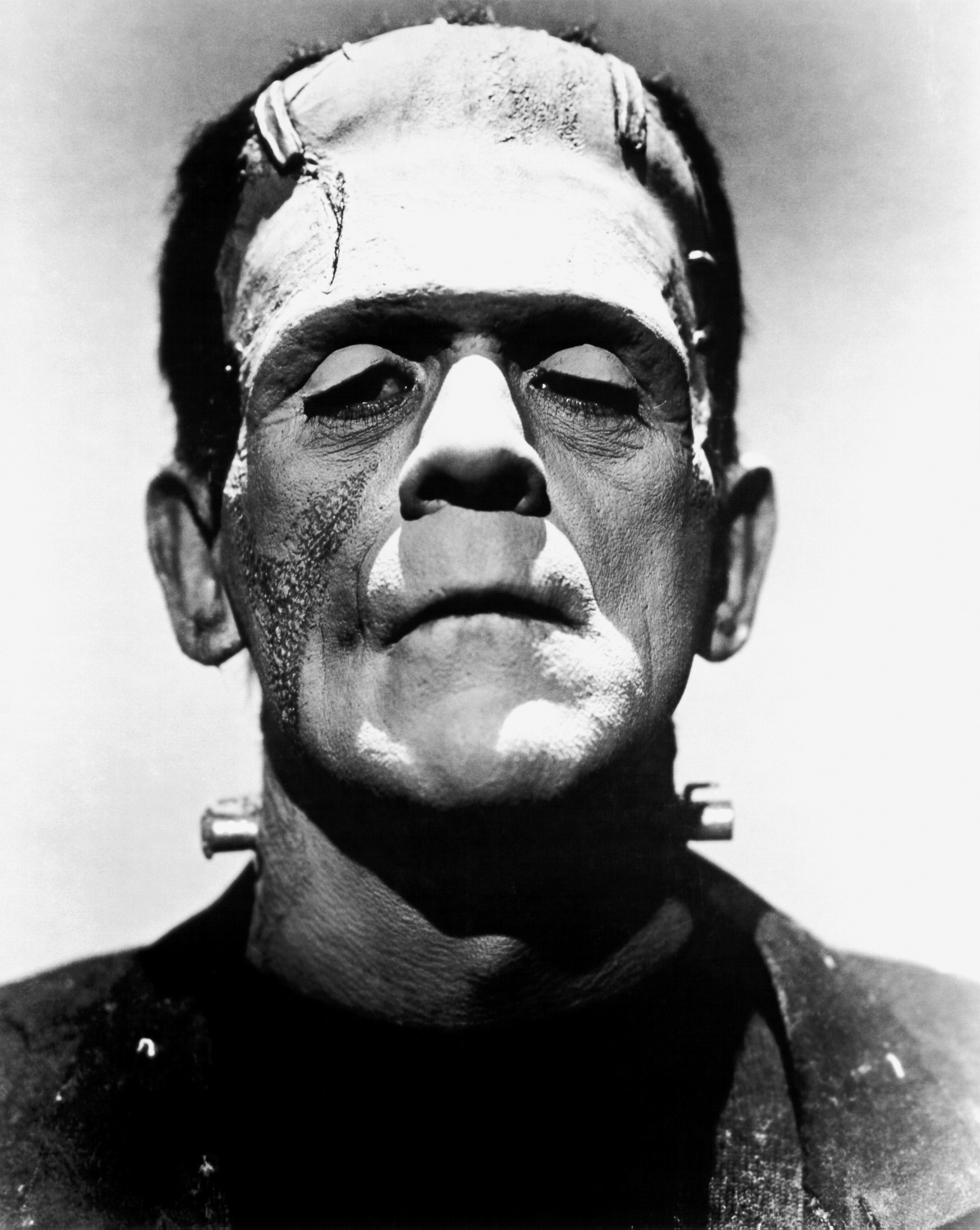
One of the most illustrative and informative aspects of the video is a comparison of the public domain-dwelling-ghouls-cum-zombies in Night of the Living Dead with the 1818-published Frankenstein of Mary Wollstonecraft Shelley that inspired the Frankenstein's monster portrayed and popularized by famed actor Boris Karloff in the 1931 James Whale-directed classic. As the Horrors of Copyright video points out, Karloff's iconic expression of Shelley's 19th century Frankenstein is still owned by Universal today and still protected under U.S. copyright law because of the longer copyright protection periods of the U.S. Copyright Act of 1976 and the 20-year copyright-extending Sonny Bono Copyright Term Extension Act of 1998.]
"Zombies are everywhere, with blockbuster TV shows like The Walking Dead and in Game of Thrones, and films such as 28 Days Later, World War Z, Zombieland, and many others. That popularity stems directly from George R. Romero’s 1968 film Night of the Living Dead. A new video essay from Kristian Williams delves into how one mistake with the film’s release led to the renaissance of zombie stories that terrify and entertain us.
That popularity is due in part to the fact that when Night of the Living Dead was released, its distributor forgot to place a copyright indicator when it changed the title from Night of the Flesh Eaters to its current moniker. According to copyright law at the time, leaving that symbol and the year off meant that it entered the public domain. “The film’s entry into the public domain became the ultimate distribution tool,” says Williams, because theaters, video stores, and TV stations could air it at no cost.
Here, you can watch it right now on YouTube, or download it off of the Internet Archive..."
[Kip Currier: Yesterday, while updating a public domain lecture for my IP graduate course and having just read this interesting piece in the PittWire about this week's 50th anniversary of the seminal 1968 zombie horror film Night of the Living Dead's world premiere at Pittsburgh's then-Fulton Theater, I came across this fascinating 2017 7-minute Night of the Living Dead - Horrors of Copyright video and played it in class for my students. The video shows how the unforgiving get-it-right-the-first-time-or-else federal copyright registration requirements of the U.S.'s pre-1976 Copyright Act registration system resulted in Night of the Living Dead entering the public domain, due to an unintended mistake by persons associated with the George R. Romero-directed film.
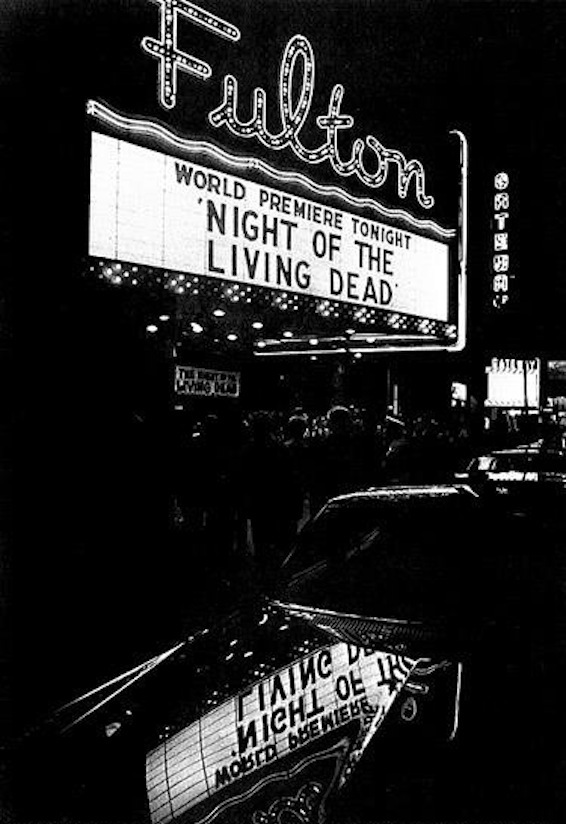
One of the most illustrative and informative aspects of the video is a comparison of the public domain-dwelling-ghouls-cum-zombies in Night of the Living Dead with the 1818-published Frankenstein of Mary Wollstonecraft Shelley that inspired the Frankenstein's monster portrayed and popularized by famed actor Boris Karloff in the 1931 James Whale-directed classic. As the Horrors of Copyright video points out, Karloff's iconic expression of Shelley's 19th century Frankenstein is still owned by Universal today and still protected under U.S. copyright law because of the longer copyright protection periods of the U.S. Copyright Act of 1976 and the 20-year copyright-extending Sonny Bono Copyright Term Extension Act of 1998.]
"Zombies are everywhere, with blockbuster TV shows like The Walking Dead and in Game of Thrones, and films such as 28 Days Later, World War Z, Zombieland, and many others. That popularity stems directly from George R. Romero’s 1968 film Night of the Living Dead. A new video essay from Kristian Williams delves into how one mistake with the film’s release led to the renaissance of zombie stories that terrify and entertain us.
That popularity is due in part to the fact that when Night of the Living Dead was released, its distributor forgot to place a copyright indicator when it changed the title from Night of the Flesh Eaters to its current moniker. According to copyright law at the time, leaving that symbol and the year off meant that it entered the public domain. “The film’s entry into the public domain became the ultimate distribution tool,” says Williams, because theaters, video stores, and TV stations could air it at no cost.
Here, you can watch it right now on YouTube, or download it off of the Internet Archive..."
Tuesday, October 2, 2018
Romero Lives!; PittWire, October 1, 2018
PittWire; Romero Lives!
"In an ironic twist, even though Romero and his team were professional filmmakers, they knew little about the business of film. It was marketed without a copyright and was distributed willy-nilly. The upside: It was constantly being shown at many venues.
The downside: No one made a dime."
"In an ironic twist, even though Romero and his team were professional filmmakers, they knew little about the business of film. It was marketed without a copyright and was distributed willy-nilly. The upside: It was constantly being shown at many venues.
The downside: No one made a dime."
Saturday, September 29, 2018
Librarians from across the Pacific gather for conference on open access, collaboration; University of California Berkeley Library News, September 24, 2018
Virgie Hoban, University of California Berkeley Library News; Librarians from across the Pacific gather for conference on open access, collaboration
"This past week, more than 60 librarians from universities across the Pacific descended upon the UC Berkeley campus, converging for a two-day deep dive into the experiments and achievements of fellow librarians working toward a more open, connected world.
The Pacific Rim Research Libraries Alliance, or PRRLA, is a group of libraries that share important resources and ideas in hopes of improving the state of scholarly research around the world. The alliance meets annually to exchange stories about various technologies and programs — and the strides and bumps along the way."
"This past week, more than 60 librarians from universities across the Pacific descended upon the UC Berkeley campus, converging for a two-day deep dive into the experiments and achievements of fellow librarians working toward a more open, connected world.
The Pacific Rim Research Libraries Alliance, or PRRLA, is a group of libraries that share important resources and ideas in hopes of improving the state of scholarly research around the world. The alliance meets annually to exchange stories about various technologies and programs — and the strides and bumps along the way."
Thursday, September 27, 2018
Compromise Music Modernization Act Will Bring Old Sound Recordings into The Public Domain, Tiptoe Towards Orphan Works Solution; TechDirt, September 19, 2018
Mike Masnick, TechDirt; Compromise Music Modernization Act Will Bring Old Sound Recordings into The Public Domain, Tiptoe Towards Orphan Works Solution
"So, this new amended bill creates a very minor tiptoe towards an orphan works concept, just with sound recordings and only for "certain noncommercial uses of sound recordings that are not being commercially exploited." This is way, way, way too limited, but it's a start. Under the rules, someone engaged in non-commercial use (and boy, I can't wait to see the litigation fights over what counts as commercial v. non-commercial use...), has to make a "good faith, reasonable search" to see if a work is being commercially exploited. Following that, they have to file a notice with the Copyright Office announcing their intention to use the sound recording, allowing a 90 day period for someone to object. If there are no objections then, the work may be used in such non-commercial projects. This is extremely limited (way too much so), but hopefully will be useful to sites like the Internet Archive and various libraries. It would be nice if it went much further, but considering that no attempt to deal with orphan works has ever gone anywhere, this seems like at least a tiny step in the right direction. At the very least, hopefully it can be used to show that the world doesn't collapse when there is a way to make use of orphan works when the copyright holder cannot be found."
"So, this new amended bill creates a very minor tiptoe towards an orphan works concept, just with sound recordings and only for "certain noncommercial uses of sound recordings that are not being commercially exploited." This is way, way, way too limited, but it's a start. Under the rules, someone engaged in non-commercial use (and boy, I can't wait to see the litigation fights over what counts as commercial v. non-commercial use...), has to make a "good faith, reasonable search" to see if a work is being commercially exploited. Following that, they have to file a notice with the Copyright Office announcing their intention to use the sound recording, allowing a 90 day period for someone to object. If there are no objections then, the work may be used in such non-commercial projects. This is extremely limited (way too much so), but hopefully will be useful to sites like the Internet Archive and various libraries. It would be nice if it went much further, but considering that no attempt to deal with orphan works has ever gone anywhere, this seems like at least a tiny step in the right direction. At the very least, hopefully it can be used to show that the world doesn't collapse when there is a way to make use of orphan works when the copyright holder cannot be found."
Europe's Copyright Reforms Are More Than (Just) A Boring Policy Change; NPR, September 27, 2018
Andrew Flanagan, NPR; Europe's Copyright Reforms Are More Than (Just) A Boring Policy Change
"In the "Information Wants To Be Free" corner, you have advocates like Cory Doctorow, who is of the opinion that regulations on the Internet can have a stifling effect on freedom of expression. They want to preserve the web "as a place where we can fight the other fights" like "inequality, antitrust, race and gender, speech and democratic legitimacy," as Doctorow put it in a recent podcast. (Doctorow obliquely references a 2004 copyright dispute around Woody Guthrie's "This Land Is Your Land," which Guthrie, in an unconfirmed statement, said he didn't "give a dern" if others performed.) Doctorow's point is that creativity is best when it's unanchored from profit motive, and thus available to be copied freely. (Doctorow himself walks the walk, making his novels available for no charge.) James Rhodes' recent experience with music that wasn't even protected by copyright isn't exactly encouraging in this regard.
Meanwhile, some copyright holders are very much interested in being paid for their creations. Lisa Alter, a visiting professor at Yale Law School and practicing attorney who specializes in music copyright, tells NPR: "Obviously, whenever there's something new, there will be a period of time where systems are worked out and glitches, but I don't see those insurmountable in the year 2018." As to situations like the one Rhodes experienced with his Bach video? "Could there ever be a erroneous takedown? Sure, but then you let them know and they should put it back up," she says. "But I don't see it being an epidemic. And the technology will get better, the filtering system will improve."
"In the "Information Wants To Be Free" corner, you have advocates like Cory Doctorow, who is of the opinion that regulations on the Internet can have a stifling effect on freedom of expression. They want to preserve the web "as a place where we can fight the other fights" like "inequality, antitrust, race and gender, speech and democratic legitimacy," as Doctorow put it in a recent podcast. (Doctorow obliquely references a 2004 copyright dispute around Woody Guthrie's "This Land Is Your Land," which Guthrie, in an unconfirmed statement, said he didn't "give a dern" if others performed.) Doctorow's point is that creativity is best when it's unanchored from profit motive, and thus available to be copied freely. (Doctorow himself walks the walk, making his novels available for no charge.) James Rhodes' recent experience with music that wasn't even protected by copyright isn't exactly encouraging in this regard.
Meanwhile, some copyright holders are very much interested in being paid for their creations. Lisa Alter, a visiting professor at Yale Law School and practicing attorney who specializes in music copyright, tells NPR: "Obviously, whenever there's something new, there will be a period of time where systems are worked out and glitches, but I don't see those insurmountable in the year 2018." As to situations like the one Rhodes experienced with his Bach video? "Could there ever be a erroneous takedown? Sure, but then you let them know and they should put it back up," she says. "But I don't see it being an epidemic. And the technology will get better, the filtering system will improve."
Don’t Make the Register of Copyrights into a Presidential Pawn; Electronic Frontier Foundation (EFF), September 25, 2018
Elliot Harmon, Electronic Frontier Foundation (EFF); Don’t Make the Register of Copyrights into a Presidential Pawn
"The Register of Copyrights Selection and Accountability Act (H.R. 1695) passed the House of Representatives last year, and now, the Senate is looking to take the bill up. Under H.R. 1695, the Register of Copyrights would become a presidential appointee, just like the directors of Executive Branch departments. Naturally, the president would appoint a Register who shares their interpretation of copyright law and other policy stances, and the nomination could come with a highly partisan confirmation process in the Senate.
The Copyright Office is at its best when it has no political agenda: it’s a huge mistake to turn the Office into another political bargaining chip. The Register of Copyrights has two important, apolitical jobs: registering copyrightable works and providing information on copyright law to the government. The Office serves officially as an advisor to Congress, much like the Congressional Research Service (both offices are part of the Library of Congress). It has never been the Register’s job to carry out the president’s agenda. That’s why the Copyright Office is situated in Congress, not in the Executive Branch."
"The Register of Copyrights Selection and Accountability Act (H.R. 1695) passed the House of Representatives last year, and now, the Senate is looking to take the bill up. Under H.R. 1695, the Register of Copyrights would become a presidential appointee, just like the directors of Executive Branch departments. Naturally, the president would appoint a Register who shares their interpretation of copyright law and other policy stances, and the nomination could come with a highly partisan confirmation process in the Senate.
The Copyright Office is at its best when it has no political agenda: it’s a huge mistake to turn the Office into another political bargaining chip. The Register of Copyrights has two important, apolitical jobs: registering copyrightable works and providing information on copyright law to the government. The Office serves officially as an advisor to Congress, much like the Congressional Research Service (both offices are part of the Library of Congress). It has never been the Register’s job to carry out the president’s agenda. That’s why the Copyright Office is situated in Congress, not in the Executive Branch."
Subscribe to:
Posts (Atom)